How to Cite
1.
Mehboob F, Umar M. The Water Storage and Crisis Management in Educational Institutions: A Case Study of Rawalpindi Medical University in the Context of SDG 6: The Water Storage and Crisis Management in Educational Institutions: A Case Study of Rawalpindi Medical University in the Context of SDG 6. JHCC [Internet]. 2026 Mar. 7 [cited 2026 Oct. 25];4(2). Available from: https://jhcc.supp.journalrmc.com/index.php/public/article/view/53
Abstract
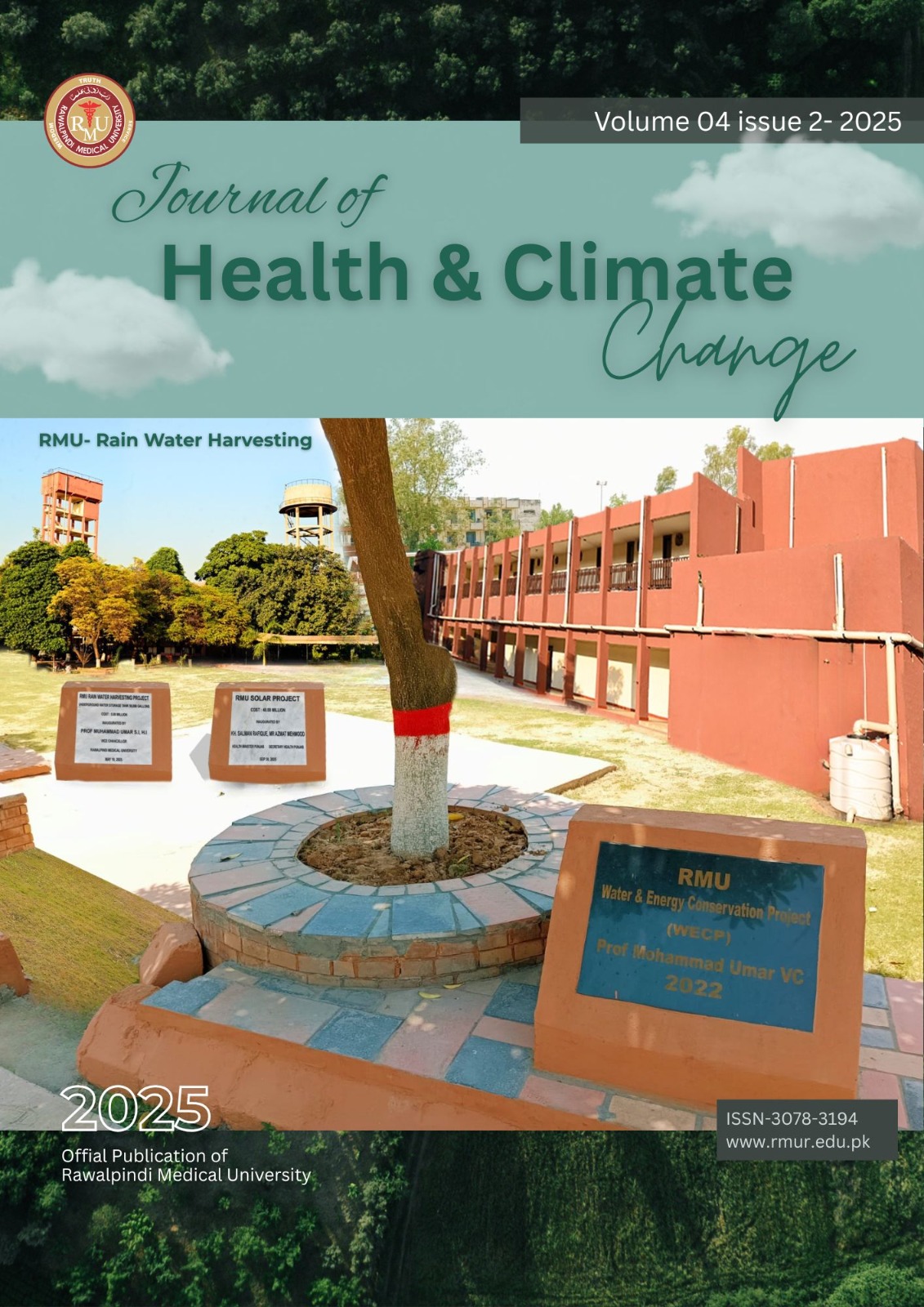
Water scarcity is an escalating challenge globally, particularly in developing countries like Pakistan. Healthcare and educational institutions require an uninterrupted and safe water supply to sustain clinical, academic, and residential operations. This review highlights the significance of water storage, crisis management strategies, and sustainable practices, with a focus on Rawalpindi Medical University (RMU) as a case study. It discusses infrastructure, environmental relevance, and policy implications in light of recent literature.

This work is licensed under a Creative Commons Attribution-ShareAlike 4.0 International License.
Copyright (c) 2026 Farhan Mehbbob, Muhammad Umar